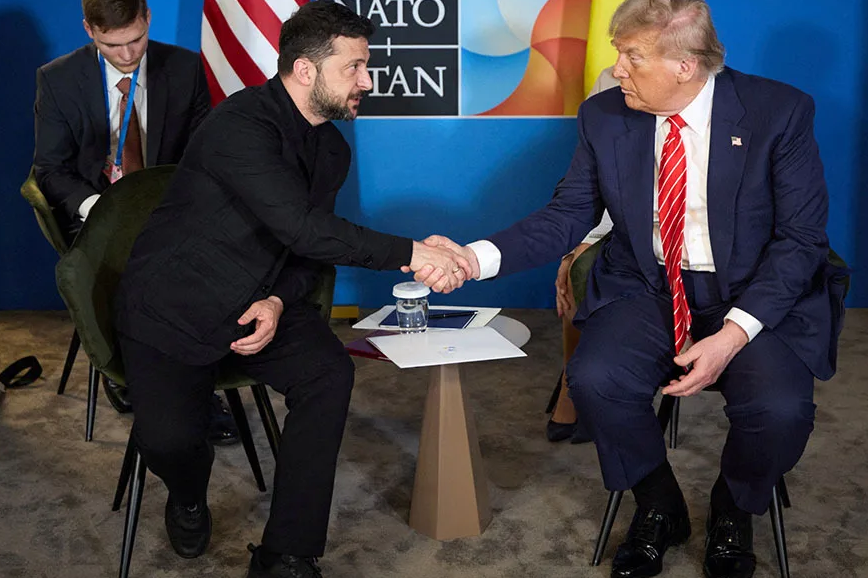
The latest attempt at U.S. mediated peace talks between Russia and Ukraine are in disarray with the chance of success rapidly shrinking. Trump originally offered Ukrainian President Volodymyr Zelensky a plan that “He’ll have to like… and if he doesn’t like it, then you know, they should just keep fighting.” And he demanded an answer by Thanksgiving. But that date has past, and the plan turned out not to have to be one that Zelensky liked.
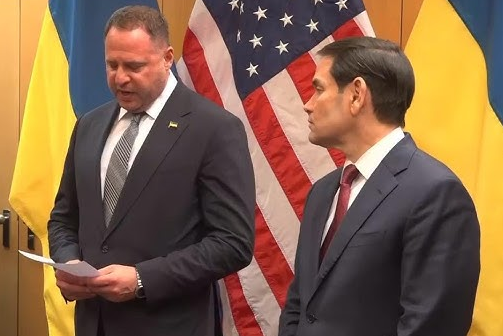
With Europe encouraging Kiev and playing with Ukrainian lives for their own humiliating goals, items on the original proposal that were key to Russian consent and ending the war have reportedly been deleted or delayed. The “updated and refined peace framework” worked out by U.S. and Ukrainian negotiators states that key issues like NATO membership for Ukraine and territorial concessions, be taken out of the framework and put off until future discussions between Trump and Zelensky. Typical of the disarray, though, Trump simultaneously posted that “I look forward to hopefully meeting with President Zelenskyy and President Putin soon, but ONLY when the deal to end this War is FINAL or, in its final stages.”
The delayed points, though, are the two key issues, or root causes, over which Russia will not stop the war. It is extremely improbable that Russia will agree to these demands prior to the end of fighting. As the needle swings toward it being more likely that Russia can achieve its key goals on the battlefield than at the negotiating table, the updated framework will quite possibly kill the deal.
The possible death of the Trump administration’s latest attempt at a diplomatic settlement is the latest tragedy in the story of this war. It was likely the best chance at granting Russia what it had to have to end the war while granting Ukraine what it had to have to achieve its own goals, as opposed to America’s or Europe’s.
Translated to the world by Western officials and the Western media as unacceptable concessions, what was asked of Ukraine was no more concessions than realizations. The major points that the West presented as unpalatable were recognition and formalization of reality, of things that were always to be. The present negotiating table became the place where wish met reality. And, sadly, wish is winning.
European officials and Western media focused only on the difficult concessions for Ukraine and presented the deal as if there were no concessions demanded of Russia. Painful points for Russia included the granting to Ukraine of security guarantees, a much larger cap on the size of the Ukrainian armed forces than it asked for, no stated ban on the supply of long-range weaponry to Ukraine, the lifting of sanctions on Russia only “in stages and on a case-by-case basis,” the theft of $100 billion in frozen Russian assets to rebuild Ukraine and no official recognition of Russian as a second language in Ukraine or of the Russian Orthodox Church.
Of course, there are terribly painful points demanded of Ukraine too. But the four points presented as the most painful are less concessions than realizations of realities that have always been done deals. The concession is in the formalizing of reality. That is painful and unfair. But changing the points in the peace proposal won’t change reality. And little has ever been fair about this war: the United States, Europe and NATO were unfair to Russia prior to the war, breaking promises made to Russia about no NATO expansion and betraying Russia in the Minks Agreements, and Russia has been unfair to Ukraine since the start of the war.
The four points presented as most painful to Ukraine are the formal and final surrendering of the right to join NATO, the de facto recognition of Russian control of all of Crimea and Donbas and the parts of Kherson and Zaporizhzhia currently under their control, caps on the size of the Ukrainian armed forces, and cultural and linguistic reforms. But all four of those concessions are, in reality, the formal recognition of long time realities.
Ukraine was never going to be granted NATO accession. This frustrating reality has long been recognized by Ukraine. At the start of the war, Zelensky said he has “understood that NATO is not prepared to accept Ukraine.” In March 2022, he said “For years we have been hearing about how the door is supposedly open [to NATO membership] but now we hear that we cannot enter. And it is true, and it must be acknowledged.” At the time, then Secretary of State Antony Blinken commented, “I don’t think that’s a concession. I think first of all it’s a reflection of reality.”
Days later Zelensky said, “I requested them personally to say directly that we are going to accept you into NATO in a year or two or five, just say it directly and clearly, or just say no. And the response was very clear, you’re not going to be a NATO member, but publicly, the doors will remain open.” But Ukraine was never offered more than metaphors: a door that was open that they could not walk through, an “irreversible path” that they could not tread or an “irreversible bridge” they could not cross.
The reality that Ukraine was never going to be embraced by NATO was made painfully clear to the Ukrainians by the public insistence by both Biden and Trump that World War III was not going to be fought for Ukraine. Every American and European leader made plain that they would not welcome Ukraine into NATO by their calibrated insistence on not becoming directly involved militarily with Russia. And there was also the reality that Russia was never going to stop this war until they received that legal guarantee in writing. Ukraine accepted this reality when they agreed to this concession during the talks in Istanbul at the start of the war.
The de facto recognition of the loss of Donbas, including the roughly 14% Russia does not yet control, is also a recognition of reality. Since the Minsk Agreements, Donbas was on the road to autonomy. When the European and Ukrainian betrayal of Russia doomed that diplomatic path to Russian protection of the rights and safety of ethnic Russian citizens of Ukraine, and then they refused to reawaken it in the days before the war, it helped to seal the military path. If Russia cannot secure Donbas diplomatically, it will secure it militarily. Placing Donbas under Russia’s protective wing, diplomatically through autonomy or militarily through annexation, has been inevitable for over a decade.
Here again, Ukrainian wish loses out to Russian reality. The key Donbas city of Pokrovsk, which some analysts now say has fallen, is nearly completely encircled and at least 95% in Russian possession. Ukraine will lose Donbas at the negotiating table or on the battlefield. But it will lose a lot less men at the negotiating table.
Ukraine and its European allies have also complained about the limiting of the Ukrainian armed forces to 600,000 personnel, seeing this as an infringement on its autonomy. But this, too, is a done deal. Being capped at that level is more a concession to reality than a concession to Russia. Ukraine is incapable of sustaining a force of that size during peacetime. They can barely sustain a force that size during wartime even with the aggressive abductions of forced mobilization.
The cap is not really a concession to Russia. In the Istanbul talks, Russia demanded a limit of only 85,000 personnel. Ukraine is getting seven times that amount. During the Istanbul talks, Ukraine asked for 250,000 personnel. The proposed framework gives them more than twice that. Though it sounds like a limitation, it would leave Ukraine with by far the largest army in Europe outside of Russia.
Ukraine and its allies have also complained about the forced surrender to Russia’s demand for denazification and the protection of ethnic Russian Ukrainians. To achieve this end, Russia had demanded that Russian be an official national language of Ukraine and that recognition be granted to the Russian Orthodox Church. The original framework agreement denies Russia that, stating only that “Ukraine will adopt EU rules on religious tolerance and the protection of linguistic minorities.”
Again, this point is no concession to Russia. Russia wanted more. It is a concession to the European Union. Ukraine has long sought to anchor itself in the West and has called for an accelerated fast-track to EU membership. But laws guaranteeing religious tolerance and protection of linguistic minorities are firm requirements of membership. The right to freedom of religion or belief is enshrined in Article 10 of the EU Charter of Fundamental Rights, and linguistic diversity is enshrined in Article 22. The Charter prohibits discrimination against people belonging to a minority group and calls for respect for cultural, religious and linguistic diversity across the EU. Adopting EU rules on religious tolerance and the protection of linguistic minorities, then, is not a concession but a recognition of the reality of the desire to join the EU.
The reportedly stricken or delayed point of the original 28-point plan are undeniably bitterly painful to Ukraine, but they are no more concessions to Russia than they are recognitions of reality, of deals that are already done. Removing them or delaying them until after a ceasefire will likely only kill the peace plan and the latest chances for peace. Killing this deal will only necessitate a future deal that will force Ukraine to recognize an even harsher reality.
Source: AntiWar.com.