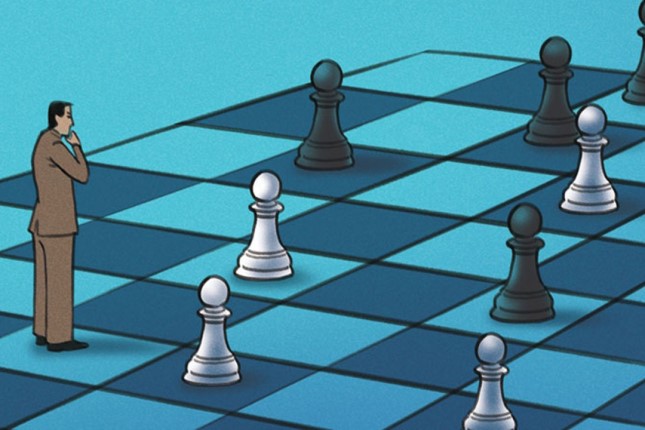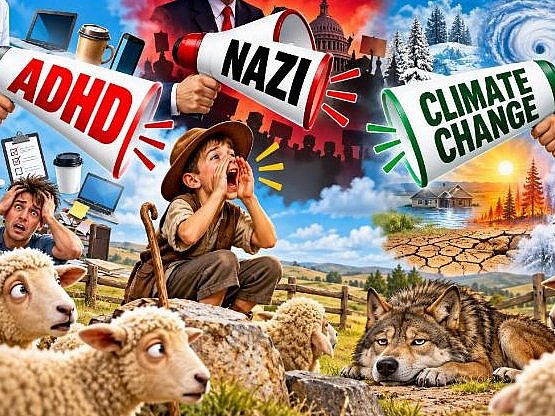
No, this article title is not an IQ test where you have to explain which one doesn’t belong and why. These three terms seem to have nothing to do with each other.
Unless perhaps they do.
Here is how they relate: Try using each term in the following sentence: When everything is (fill in the blank), nothing is (fill in the blank).
In the U.K., seven in 10 GPs (general practitioners of medicine) believe adult ADHD is overdiagnosed, according to The Telegraph.
Assessment has become a cottage industry. Once referred to a specialist for evaluation, virtually everyone receives an ADHD diagnosis.
Once diagnosed, the industry shifts to treatment — stimulant medications, behavioral therapy, and counseling — consuming government and patient resources.
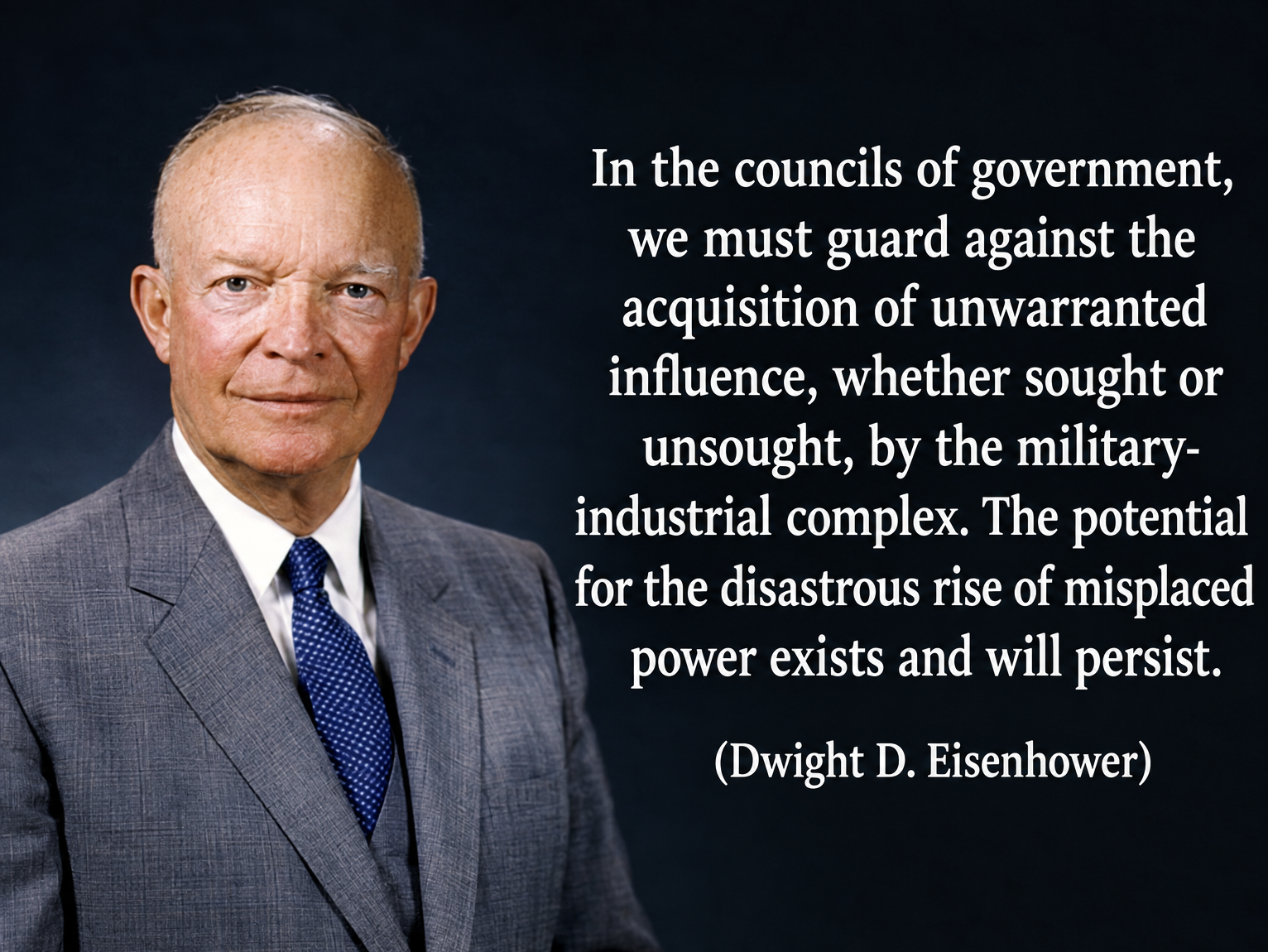
It’s one more example of the medical-industrial complex.
On this side of the pond, the Association of American Medical Colleges notes that ADHD “can be overhyped” and that few doctors are prepared to treat a condition that was “long considered an issue only for kids.”
What is adult ADHD? One thinks of a fidgety child with ADHD, or “ants in your pants,” as my grandmother would say. Adults can be afflicted as well, with typical symptoms of inattention, hyperactivity, and impulsivity.
But where are the boundaries?
Too much coffee? Too little sleep? Stress at home or work? Too many hours staring at a smartphone? Or a true medical disorder?
When does the spectrum of normal human behavior veer into mental-health pathology?
When everything is ADHD, nothing is ADHD.
Now let’s talk about Nazis.
No one will argue that the era of Adolf Hitler and the Nazis was anything but one of the darkest periods in modern history. Yet “Hitler” and “Nazi” are thrown around like confetti when labeling political opponents.
Prominent Republicans such as Donald Trump and George W. Bush have been depicted as Hitler. To be fair, similar imagery has been directed at Barack Obama.
Political disagreements are normal. But routinely calling political opponents Hitler or Nazis turns extraordinarily grave historical terms into ordinary political insults. If any elected official can be labeled a Nazi, the word becomes just another pejorative, gradually losing its historical specificity.
If everyone is a Nazi, then no one is a Nazi.
The third overworked term is climate change.
Once upon a time, the public was warned about global cooling. A widely read 1975 Newsweek article, “The Cooling World,” warned of dramatic changes in weather patterns, declining food production, and potentially serious consequences around the world.
Later the public concern became global warming. Today the broader term is climate change.
But climate and weather are not synonymous.
A hurricane? Climate change. A drought? Climate change. Flooding? Climate change. Wildfires and heat waves? Climate change. Even unusual cold and snow can find their way beneath the same umbrella.
That doesn’t mean a changing climate cannot influence the probability or severity of certain types of weather. And throughout the history of planet Earth, the climate has been constantly changing.
It means that simply labeling every unusual or destructive weather event “climate change” is not an explanation.
When everything is climate change, nothing is climate change.
There is actually a name for what these three examples have in common: “concept creep.”
Psychologist Nick Haslam coined the term to describe what happens when the boundaries of concepts gradually expand. A word once reserved for something relatively specific begins encompassing more behaviors, events, or circumstances. Eventually its boundaries become so elastic that things once considered different — or simply less extreme — fall beneath the same umbrella.
Haslam describes this expansion in two directions. Concepts can expand outward to include qualitatively different phenomena and downward to include progressively less extreme ones.
The irony is that such expansion can ultimately diminish the very causes the terminology was intended to advance.
ADHD is a genuine neurodevelopmental disorder. But if every distracted, restless, overworked, underslept adult has ADHD, how do we distinguish those with a disabling disorder from those experiencing the ordinary frustrations of modern life?
Nazism was not merely disagreeable politics. It was a totalitarian ideology responsible for war, persecution, and industrialized mass murder. If every politician we dislike becomes Hitler and every objectionable policy becomes Nazism, what vocabulary remains when something truly resembling it appears?
Climate change provides a similar lesson. The climate changes. But that doesn’t mean every hurricane, drought, flood, wildfire, blizzard, or heat wave can simply be stamped “climate change” and the scientific work declared finished.
The point is not whether ADHD exists, whether Nazis existed, or whether climate changes.
Of course they do and did.
The point is what happens when terminology expands so far beyond its useful boundaries that it begins losing the precision that once gave it meaning.
Precision matters.
Medicine depends on diagnostic criteria because without boundaries, diagnoses lose meaning. History depends on distinctions because without them, the exceptional becomes ordinary. Science depends on testable propositions because an explanation capable of explaining every possible observation risks explaining very little.
Language works the same way.
We see similar linguistic inflation elsewhere. A disagreement becomes “hate.” An unpleasant experience becomes “trauma.” Criticism becomes “bullying.” A disputed opinion becomes “misinformation.” Words once describing relatively specific things expand until they become cultural catchalls.
Another name for this 'concept creep' might simply be crying wolf.
The boy in Aesop’s fable wasn’t wrong because wolves didn’t exist. Quite the opposite. Wolves were very real.
His mistake was sounding the alarm so indiscriminately that eventually no one paid attention.
That is the danger of linguistic inflation. The more powerful a word, the greater the temptation to deploy it. But each indiscriminate use spends a little of its power.
Eventually ADHD becomes distraction, Hitler becomes someone you didn’t vote for, and climate change becomes bad weather.
And when everything means everything, eventually words mean nothing.
Source: American Thinker.