Given the gush of vitriol and condemnation since Oct. 9, when Donald Trump announced his deal to import 5 million metric tons of Russian diesel, roughly 37 million barrels, one would think the president had surrendered the United States’ sovereignty to the Kremlin, or handed over the Ukrainians to the Russian army, or rankly betrayed the Europeans or altogether renounced what we picturesquely call Western civilization.
This is, indeed, what we read daily in the corporate press these days and what we are supposed to think. It is 2016 redux, it seems. Another round of Russiagate may not be far off, given 16 House Democrats have introduced a Prohibit Corrupt Russia Oil Deals Act and 12 senators now attack the diesel accord as “a gift to our adversary.”
If there is one thing essential to recall about those dreary years it is that the wobbly-from-the-first Russiagate edifice, the whole of it, was made of mis– and disinformation, hyperbole, innuendo, extravagant abuses of office and propaganda incessantly disseminated in corporate media.
It was, in short, the Deep State’s attempt to scuttle any effort to advance beyond the poisonous Russophobia it had spent a decade cultivating (taking my date from Vladimir Putin’s era-defining speech to the Munich Security Conference in 2007).
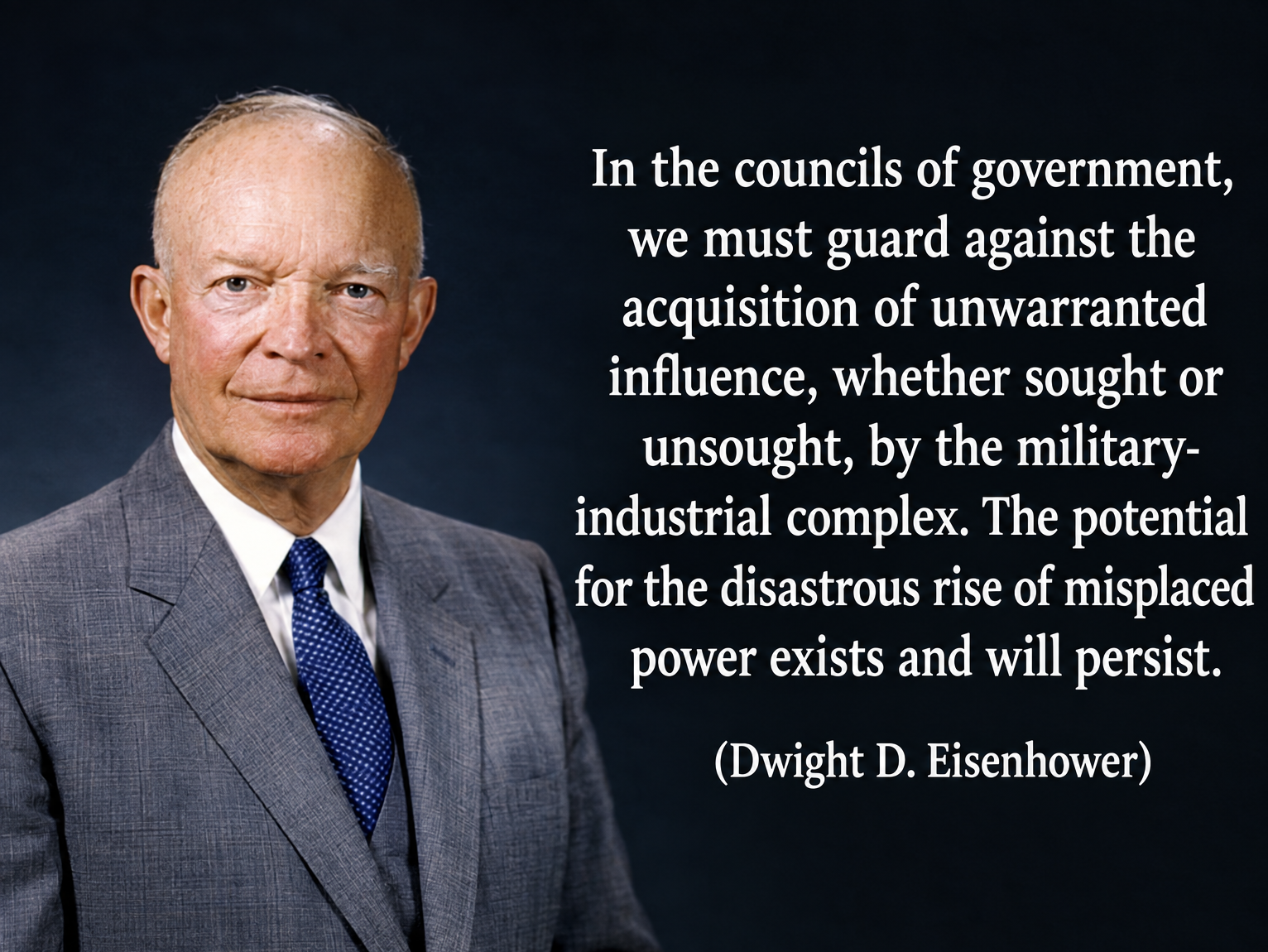
It is the same again as Trump tries once more to end the war in Ukraine and refashion East–West relations, a project the old “MICIMATT”— the military-industrial, congressional, intelligence, media, academic and think tank blob — simply cannot abide.
Let us listen to this new round of rubbish with the recent past in mind.
“Donald Trump, meet Neville Chamberlain.” That is Tom Friedman, writing in The New York Times last week under the headline, “Trump’s Democracy–for–Diesel Deal Shames Us All.”
“When future students search online for ‘sellout,’ ‘appeaser’ or ‘traitor to his country’s core values,’” Friedman elaborates, “their two pictures will come up first, side by side.” There is no matching our Tom when it comes to overdrawn historical reference dressed up as intellectual gravitas.
Harold Meyerson, writing in The American Prospect Tuesday under the headline, “Why Putin Is Now Our Ally,” is unhappy that Americans are not angrier and more contemptuous than they appear to be in response to Trump’s latest démarche to Russia.
“We’ve grown so inured to Trump’s outrages,” he writes, “that his alliance with Russian President Vladimir Putin’s neo–Tsarist imperialist regime hasn’t yet stoked the level of horror and rage it deserves.”
Putin’s neo–Tsarist imperialist regime. We’re back to this, are we?
We’re also back to the good old Trump–Putin “bromance” bit, it seems, as in “Trump’s man-crush on the Russian dictator has been well documented and need not be recounted in all its unctuous detail.”
This bizarre suggestion of homophilia repeats a tiresome trope from the Russiagate years — never in the slightest documented, for the record — and this time comes from Tom Nichols, a neoliberal hack of long standing. Writing Oct. 18 in The Atlantic, Nichols wants us to see matters this way:
“Donald Trump has now abandoned pretense and is openly aiding the Kremlin in its war against a friend and partner of the U.S. The American commander in chief has abandoned the Western order, the most successful — and powerful — security arrangement in human history.”
Are we clear on all this? The corrupt, Nazi-infested regime in Kiev is America’s friend and partner, simple as that.
The Western order as we have it is the finest thing humanity has ever managed, and Donald J. Trump has forsaken this finest-ever order.
All because the Trumpster signed an agreement whereby the United States will purchase, all in, about two weeks’ worth of Russian diesel fuel.
Paranoia strikes deep, as should be plain to all as the imperium proceeds into its self-inflicted decline. Into the pages of The Atlantic it will creep whenever the topic is “Putin’s Russia” (as against “Russia”).
Trump’s ‘Simple’ Decision
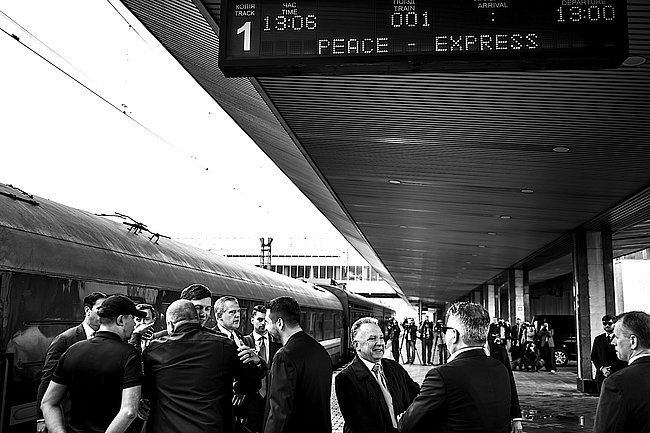
Trump negotiators Steve Witkoff and Jared Kushner arriving at Kyiv-Pasazhyrskyi railway station last month for a meeting with Ukrainian President Volodymyr Zelenskyy about ending the Russia-Ukraine War.
How to account for this outpouring of nitwittery from all these pseuds? Why so suddenly does the world seem to be coming to an end? These are our questions.
Trump II has proven disastrously worse than Trump I, to state the obvious. He had a few good ideas the first time around: end the wars of adventure, bring the soldiers home, decommission NATO, a new détente with Moscow.
This time — and you have to credit the Trumpster for this, strange as it is to credit him with anything — he has only one. He still wants to restore relations with Russia to a working order of some kind, and this must begin with ending the war the Biden regime provoked very quickly after Trump was voted out of office.
Trump is a Manhattan property man for whom everything is transactional, we have to remember. Exploring “deals” does not figure at the higher end of statecraft — certainly not given all that is at issue between Russia and the West — but this is a question of method, not purpose. Let us not get lost in the former while losing sight of the latter.
Peaceful, constructive relations with Russia, based on an enduring settlement of benefit to all sides, are a good thing altogether to be welcomed, however often Americans and West Europeans are told any such eventuality would amount to the horror of horrors.
As everyone thinking about this has remarked, Trump’s immediate intent in striking his diesel deal is to get prices down as best he can before the midterm elections and to pretend the price crisis has causes other than the U.S.–Israeli assault on Iran.
I’m for setting the politics aside. A few days’ worth of diesel — all that can possibly arrive from Russian refineries before Nov. 3 — won’t make any difference, and Trump cannot but know this.
My mind goes to a remark Trump made on Truth Social, his digital bullhorn, at the beginning of this week in response to all the shrieking and shouting that followed his Oct. 9 announcement:
“My decision on Russia is a very simple one. I am in the process of negotiating Peace in the war between Russia and Ukraine, and don’t want to do anything that will drive, foolishly, Russia away from the bargaining table.”
It is important to read this together with other things the Trump regime has got up to lately. While the United States is in plausible-denial mode, Kiev reports that it has disrupted some of the early-warning satellite intelligence vital to Ukraine’s defenses.
Elon Musk, apparently after consultation with the White House, has restricted Ukraine’s use of Starshield, the military-grade version of the Starlink communications system.
These are day-to-day lifelines. So is the Prioritized Ukraine Requirement List, the arrangement whereby the United States sells arms to the Europeans, who send them on to Ukraine. To date the volume of shipments through the P.U.R.L. channel has come to $7 billion. Trump is reportedly threatening to end the program.
Atop all this he has suspended implementation of a sanctions bill he signed into law only a month ago. Concurrently, the Witkoff–Kushner duo presented Volodymyr Zelensky, the Ukrainian dictator, with a new settlement proposal that reads to me like a condensed version of the very creditable 28–point plan they presented a year ago next month.
Something is afoot, it seems to me. I see a thought-through strategy in all this. I see renewed determination on Trump’s part.
Trump is out of the closet at last — and perfectly accurate — as he asserts that Zelensky is the principal impediment to a settlement accord and, so, should be either removed from office or forced to accept defeat and recognize Russia’s legitimate interests.
Trump’s new push to bring the Ukraine crisis to a close, to be clear on this point, is not a betrayal of the Ukrainian people. It is just the opposite.
There are a lot of reasons to question how far Trump will get either in ending the war or restoring relations with Russia to a livable détente. But if he maintains the present momentum, we may be watching the beginning of the endgame in Ukraine.
This is a “may,” conditional verb required. But it is this prospect that has all the warmongers in the MICIMATT complex in a dither.
Strange it will be if a president so wrong about so much manages to achieve the peace he is after. But maybe the Tom Friedmans and the Tom Nichols and the rest of their kind are useful as a mirror.
Maybe the extent of their panic is a measure of the Trumpster’s chances of success this time around.
Source: Consortium News.