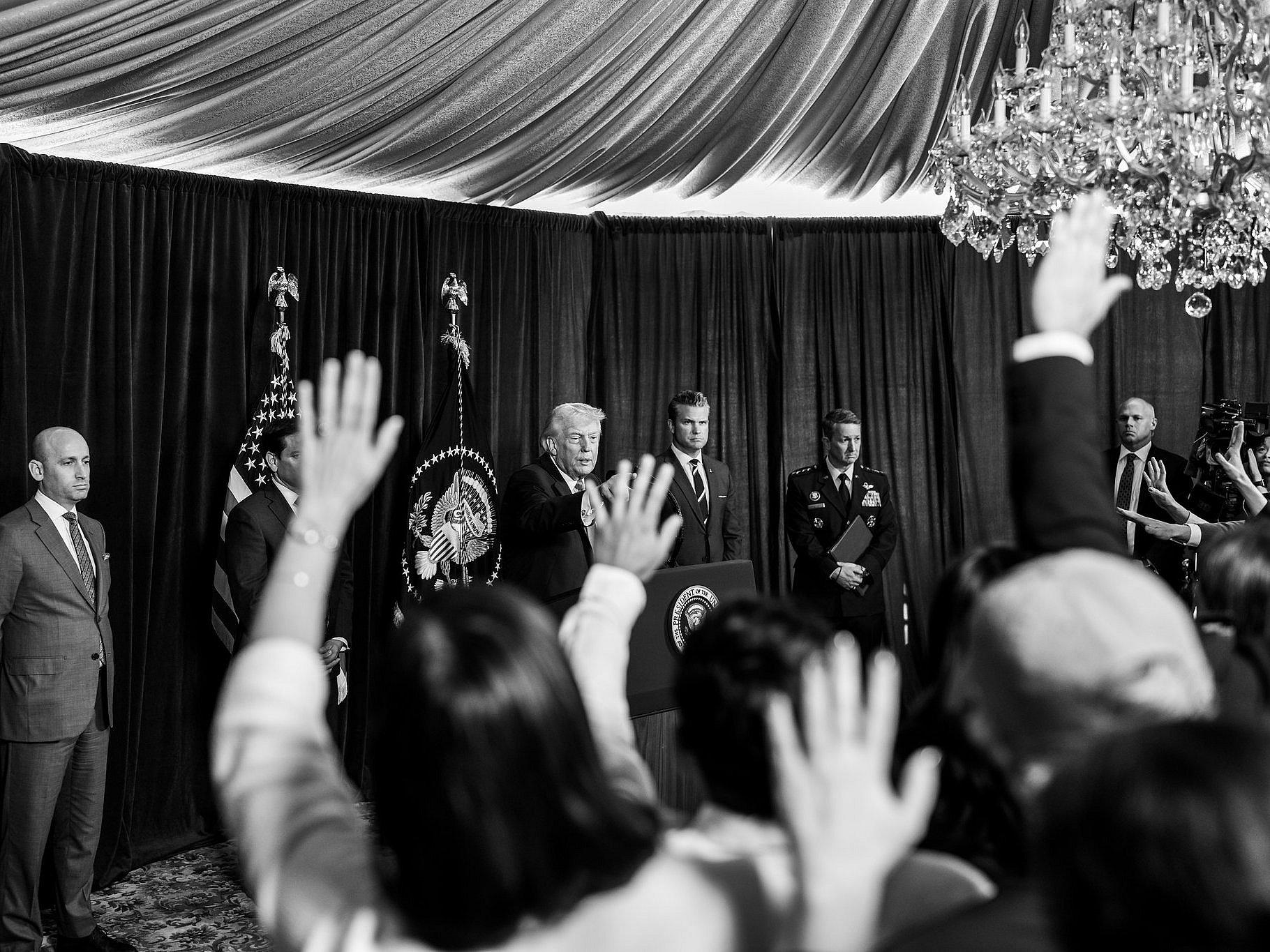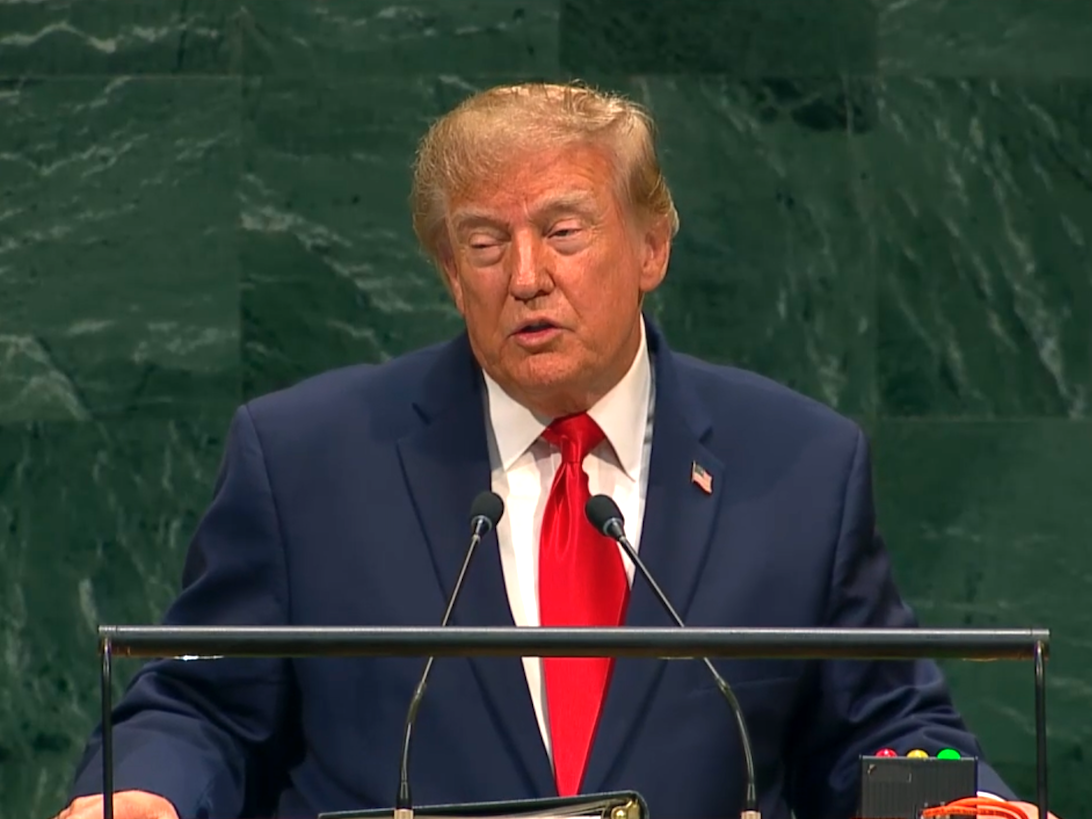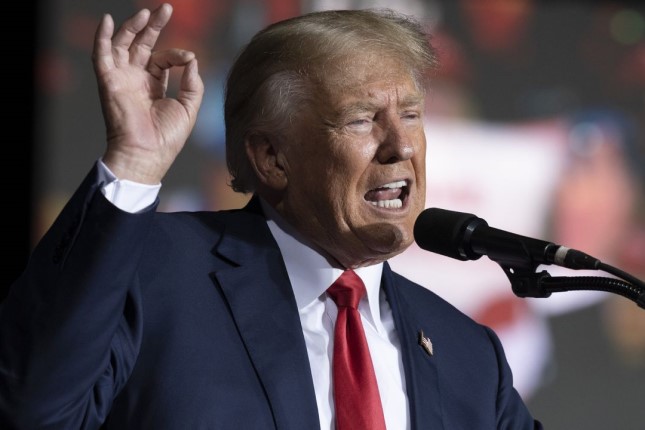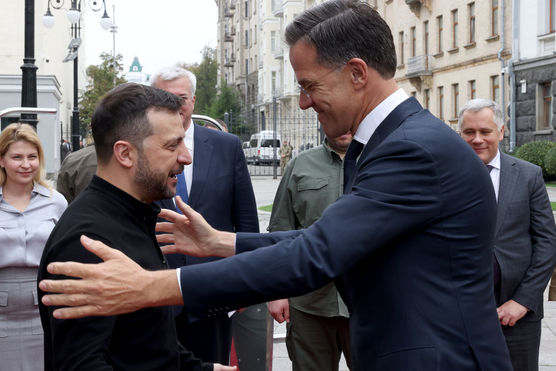
Trump personally has sent an array of mixed signals about his intentions. Although he has pressured Ukraine president Volodymyr Zelensky to accept the reality that Kyiv must be willing to make territorial concessions to Moscow in any peace accord, he also has been receptive to Zelensky’s demand that Ukraine be given reliable “security guarantees” in such a settlement. Indeed, during the recent summit meeting between the two leaders, the main point of disagreement appeared to be that Zelensky wanted a commitment lasting 50 years, whereas Trump was prepared to offer only 15 years.
Not only is Kyiv insisting on a firm, detailed guarantee of protection, but also Ukraine’s European supporters in NATO are doing so. Worse, Trump seemed to sign onto a new 20-point “peace plan” being pushed by Zelensky and his European backers. Only Russia’s curt rejection of the scheme has so far prevented it from further consideration.
A potentially deadly snare lies in wait for the United States. U.S. leaders must avoid it at all costs. Throughout the years of the Ukraine crisis, most attention has focused on Kyiv’s desire for formal membership in NATO and Russia’s repeated refusal to tolerate that option. Indeed, the principal cause of the current war was the clash between Russia and NATO regarding that issue.
However, the substantive issue has never been merely the prospect of Ukraine’s formal membership in NATO. Instead, the real threat to Russia’s security, from Moscow’s viewpoint, has been NATO’s attempt to turn Ukraine into a significant military asset for the Alliance. It matters little whether that development occurs because of Kyiv’s official membership in NATO or because of new, separate Western security guarantees.
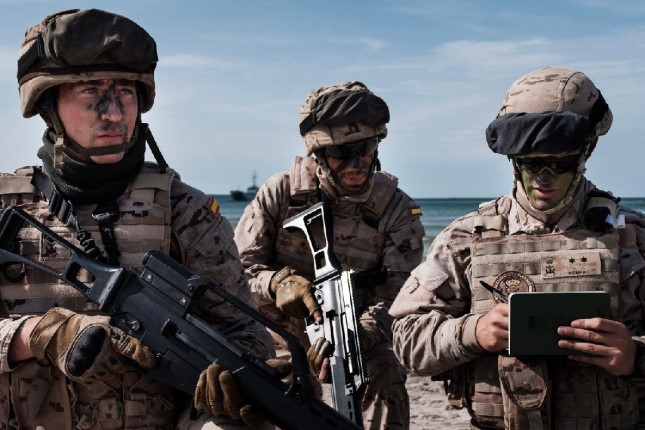
Indeed, the ties would not have to be all that formal to constitute a dangerous provocation toward Moscow. Several NATO governments have repeatedly engaged in loose talk about sending their troops as “peacekeeping personnel” to Ukraine to enforce a settlement. Indeed, some of those countries appear willing to incur such a risky commitment to implement a mere “truce” between the feuding parties. Both Great Britain and France have stated that they intend to establish “military hubs” across Ukraine with their forces. In one of his more reckless, irresponsible moments, President Trump expressed his willingness to consider having the United States “backstop” such European efforts.
Washington must emphatically reject any attempted ploys of that nature. Even a paper security guarantee to Kyiv would put any and all guarantor powers at risk. A decision to deploy so-called peacekeeping forces would be even worse. The Kremlin has made it emphatically clear that the presence of any troops by a NATO member in Ukraine is intolerable. Moscow likely would view a troop presence by NATO’s European contingent, much less the United States, as an existential threat to Russia’s security.
It would be folly for U.S. policymakers to rely excessively on the language contained in the North Atlantic Treaty to limit the danger of an undesirable military entanglement. Article 5 obliges NATO signatories to regard an act of aggression against any NATO member state as an attack against them all. The actual language regarding the obligation under Article 5, though, is so vague as to be meaningless, if a member seeks to evade taking serious action. The provision merely requires allies to render (undefined) assistance to the victim of aggression. Crucially, there is no commitment to launch military strikes against the alleged aggressor or to send troops into combat to aid the beleaguered ally. Merely providing logistical aid could fulfill a member’s obligation. The NATO countries that have sent weaponry or provided targeting and other intelligence data to Ukraine have easily met or exceeded any implied Article 5 obligation, even if Kyiv had been a member of the Alliance.
But in the real world, multiple NATO governments would seek to inflate the U.S. commitment under Article 5 to deepen Washington’s entanglement in the Alliance’s proxy war against Moscow. A pervasive myth persists in America and the rest of the world that the United States has an official treaty obligation to go to war if another NATO country comes under attack. Giving Ukraine a security guarantee would consolidate and strengthen that myth. In other words, U.S. leaders would find themselves under enormous pressure to launch a direct military intervention to support NATO peacekeepers in Ukraine regardless of the actual language contained in Article 5.
That is why any NATO troop presence in Ukraine, or any official security guarantee to Kyiv, would be so dangerous. Given the enormous political and military pressures that would be coming from Kyiv’s fan club throughout the West, it is highly improbable that U.S. leaders could avoid an armed clash with Russian forces merely by citing the limited, conditional language in Article 5. Legalistic quibbling is not the way events proceed when raw, wartime emotions are in play.
Trump administration officials need to spurn proposals for any Alliance security guarantee to Ukraine, much less a deployment of NATO peacekeepers. Washington must emphatically reject schemes that would include a U.S. military presence of any size or nature in Ukraine. President Trump’s casual musings about supporting a NATO peacekeeping contingent not only are irresponsible, but also constitute a betrayal of his political supporters in the last election. They believed that their candidate was committed to extricating the United States from an unnecessary and debilitating geopolitical venture. Unfortunately, Trump appears to be on course to disappoint advocates of a more prudent U.S. foreign policy yet again.
Source: AntiWar.com.